
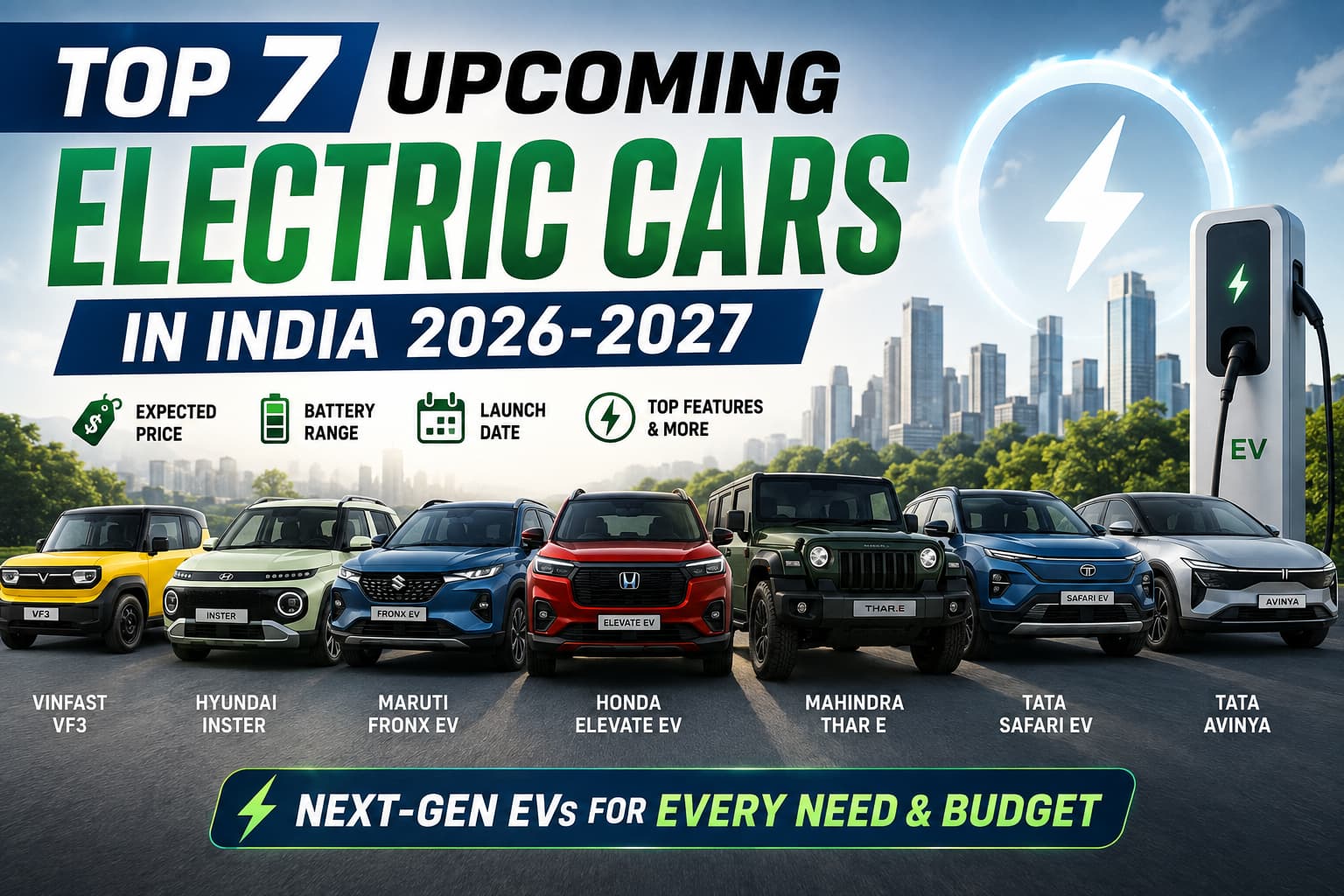
The Indian automotive landscape is witnessing a massive transition toward clean mobility. Rising fossil fuel costs, greater environmental awareness, and expanding fast-charging corridors across national highways have made Electric Vehicles (EVs) a mainstream choice. The days of severe range anxiety and limited charging options are rapidly fading, replaced by high-capacity battery packs, advanced thermal management, and ultra-fast DC charging infrastructure.
Established domestic giants like Tata Motors and Mahindra are expanding their dedicated EV line-ups, while global brands like Honda, Hyundai, and VinFast are preparing high-profile launches in India. From entry-level city micro-SUVs to purpose-built 4×4 lifestyle off-roaders and three-row family cruisers, the 2026-2027 pipeline offers compelling choices across every budget.
If you plan to switch to electric mobility over the next 12 to 24 months, here is a comprehensive breakdown of the most anticipated upcoming electric cars in India.
Upcoming Electric Cars in India at a Glance
| Car Model | Segment / Body Style | Expected Price (Ex-Showroom) | Claimed Range (ARAI / MIDC) | DC Fast Charging (10-80%) | Expected Launch Timeline |
| VinFast VF3 | Micro Urban SUV | ₹ 9.00 – 10.00 Lakh | 200 – 250 km | ~30 Minutes | October 2026 |
| Hyundai Inster EV | Sub-Compact EV | ₹ 10.00 – 12.00 Lakh | 300 – 350 km | ~30 Minutes | November 2026 |
| Maruti Suzuki Fronx EV | Crossover SUV | ₹ 12.00 – 15.00 Lakh | 350 – 400 km | ~35 Minutes | March 2027 |
| Honda Elevate EV | Mid-Size SUV | ₹ 18.00 – 22.00 Lakh | 400 – 450 km | ~30 Minutes | Late 2026 |
| Mahindra Thar E | Lifestyle 4×4 SUV | ₹ 25.00 – 30.00 Lakh | 400 – 450 km | ~30 Minutes | Late 2026 |
| Tata Safari EV | 6/7-Seater Premium SUV | ₹ 26.00 – 32.00 Lakh | 450 – 500 km | ~30 Minutes | Late 2026 |
| Tata Avinya | Born-Electric Luxury MPV/Crossover | ₹ 35.00 – 40.00 Lakh | 500+ km | ~20 Minutes | Early 2027 |
In-Depth Analysis: Key Electric Cars Launching in 2026–2027
1. Mahindra Thar E
The legendary Mahindra Thar is set to arrive in a dedicated electric avatar built from the ground up on Mahindra’s INGLO P1 platform. Unlike internal combustion conversions, this skateboard architecture provides optimal weight distribution, a flat floor, and a low center of gravity.
- Battery and Performance: Expected 60 kWh to 75 kWh battery options paired with high-torque electric motors delivering rapid throttle response and exceptional wheel articulation.
- Real-World Range: Estimated between 340 km and 380 km on mixed terrain and highway drives.
- Key Features: Dual-motor AWD / Quad-motor setup, nearly 300 mm ground clearance, modular/swappable exterior components, water-resistant minimalist cabin, and off-road crawl modes.
- Why Buy It: Zero-emission extreme off-roading capability combined with the iconic road presence of the Thar.
- Target Buyer: Off-road enthusiasts, lifestyle adventurers, and buyers seeking rugged styling without high tailpipe emissions.
2. Honda Elevate EV
Honda’s mass-market electrification strategy in India will kick off with the all-electric version of the Elevate. Known for refined ride quality, cabin space, and active safety, the Elevate EV aims to provide a dependable mid-size electric SUV package.
- Battery and Performance: Expected 50 kWh to 60 kWh liquid-cooled battery pack delivering approximately 150 PS to 170 PS of peak power.
- Real-World Range: Expected to consistently deliver 340 km to 380 km in city-highway mixed usage.
- Key Features: Full Honda Sensing Level-2 ADAS suite, multi-angle surround cameras, expansive cabin space, crisp floating touchscreen infotainment, and optimized suspension for Indian roads.
- Why Buy It: Rock-solid Japanese engineering, low NVH levels, mature highway dynamics, and high long-term reliability.
- Target Buyer: Urban families looking for a practical, safe, and comfortable daily driver that easily doubles as a highway tourer.
3. VinFast VF3
Vietnam-based EV maker VinFast is entering India with aggressive localization, and the VF3 serves as its entry-level urban offering. Featuring a boxy, two-door footprint, it targets budget-focused city commuters.
- Battery and Performance: ~18.6 kWh to 20 kWh Lithium Iron Phosphate (LFP) battery pack generating roughly 40 PS to 45 PS of power.
- Real-World Range: Realistic urban commuting radius of 170 km to 200 km on a full charge.
- Key Features: Upright retro-futuristic exterior, tight turning radius, 10-inch central touchscreen interface, smart regenerative braking, and practical city clearance.
- Why Buy It: Highly accessible price point, effortless parking in dense traffic, and minimal per-kilometer operating expenses.
- Target Buyer: First-time car buyers, daily office commuters, and households looking for an economical second vehicle for city errands.
4. Hyundai Inster EV
The Hyundai Inster brings segment-first tech and micro-SUV practicality to challenge competitors like the Tata Punch EV. It features a modern interior design paired with efficient battery management.
- Battery and Performance: 42 kWh standard and 49 kWh extended-range options delivering between 97 PS and 115 PS of output.
- Real-World Range: Expected between 240 km and 290 km in routine daily driving conditions.
- Key Features: Twin 10.25-inch connected display screens, Vehicle-to-Load (V2L) bidirectional power capability, 360-degree parking cameras, full ambient lighting, and comprehensive passive safety.
- Why Buy It: High feature density, premium interior fit-and-finish, and Hyundai’s widespread service footprint.
- Target Buyer: Tech-forward urban drivers and small families who prioritize modern features and easy maneuverability.
5. Tata Safari EV
Tata Motors leads India’s electric passenger vehicle segment, and the Safari EV stands as its flagship three-row offering. Built on the advanced acti.ev architecture, it caters directly to large families and long-distance highway tourers.
- Battery and Performance: Anticipated 60 kWh to 75 kWh battery capacity with an optional Dual-Motor All-Wheel Drive (AWD) layout.
- Real-World Range: 380 km to 430 km of dependable real-world highway driving on a full charge.
- Key Features: Dual-motor AWD, ventilated front and middle-row captain seats, Level-2+ ADAS suite, 12.3-inch Harman cinematic infotainment, panoramic sunroof, and terrain response systems.
- Why Buy It: Massive three-row cabin space, 5-Star Bharat NCAP safety rating, and authoritative road presence.
- Target Buyer: Joint families and regular long-distance travelers demanding luxury comfort, high safety, and zero tailpipe emissions.
6. Maruti Suzuki Fronx EV
Maruti Suzuki is expanding its electric lineup with an all-electric version of the Fronx crossover. The crossover’s aerodynamic coupe roofline and lightweight modular architecture make it a compelling electric choice for mass buyers.
- Battery and Performance: Expected 45 kWh to 50 kWh battery pack linked to a permanent magnet synchronous electric motor.
- Real-World Range: 300 km to 340 km of practical combined range.
- Key Features: Head-Up Display (HUD), advanced telematics, multi-stage regenerative braking paddles, wireless connectivity, and low rolling resistance aerodynamics.
- Why Buy It: Unrivaled service network, readily available parts, competitive purchase price, and robust resale confidence.
- Target Buyer: Value-conscious buyers seeking modern styling paired with dependable brand support and low maintenance costs.
7. Tata Avinya
The Tata Avinya represents the Tata Group’s next-generation “Gen-3 Born Electric” vision. Built on JLR’s EMA platform architecture, it eliminates internal combustion compromises to offer an ultra-modern luxury lounge experience.
- Battery and Performance: 80+ kWh battery pack equipped with ultra-fast charging capabilities.
- Real-World Range: 450 km to 500+ km of real-world cruising range.
- Key Features: 800V electrical system enabling 10-80% top-ups in under 20 minutes, lounge-style sustainable interiors, voice-first human-machine interface, pillarless coach doors, and Level-3 autonomous driving readiness.
- Why Buy It: Global luxury standards, future-ready charging technology, and expansive cabin architecture.
- Target Buyer: Luxury automotive buyers looking for a sophisticated, high-tech domestic alternative to German luxury EVs.
4 Crucial Factors to Evaluate Before Buying an EV
When moving from a petrol or diesel car to an electric vehicle, keep these four operational aspects in mind:
- Real-World vs. ARAI Range: Certified test numbers are recorded under controlled lab testing. Expect actual real-world range with active air conditioning, passenger load, and highway speeds to be 15% to 25% lower than the claimed figures.
- Dedicated Home Charging Setup: Over 80% of EV charging occurs at home or the workplace. Ensure your residential parking spot supports the installation of a 3.3 kW or 7.2 kW AC Wallbox charger before taking delivery.
- Battery Chemistry and Warranty: Most manufacturers offer an 8-year or 1,60,000 km battery warranty. Lithium Iron Phosphate (LFP) chemistry offers excellent thermal stability in high-temperature environments.
- Daily Mileage and Financial Breakeven: Electric vehicles carry higher upfront acquisition costs than petrol equivalents. An EV pays for itself quickest if your regular usage exceeds 35 km to 40 km per day.
Total Cost of Ownership: 5-Year Financial Comparison (40 km Daily / 75,000 km Total)
| Ownership Expense | Petrol Car (Mid-Size SUV) | Electric Car (Mid-Size SUV) | Total Savings with an EV |
| Fuel / Energy Price | ₹ 100 / Litre (Mileage: 12 km/l) | ₹ 8.50 / Unit (Efficiency: 7 km/kWh) | Substantial Per-KM Difference |
| Running Cost per KM | ~ ₹ 8.33 / km | ~ ₹ 1.21 / km | Save ₹ 7.12 per KM |
| Annual Fuel Cost (15,000 km) | ₹ 1,24,950 | ₹ 18,150 | ₹ 1,06,800 saved per year |
| 5-Year Fuel Cost (75,000 km) | ₹ 6,24,750 | ₹ 90,750 | ₹ 5,34,000 total fuel savings |
| 5-Year Routine Service Cost | ~ ₹ 55,000 – ₹ 65,000 | ~ ₹ 18,000 – ₹ 25,000 | ₹ 35,000+ service savings |
| Estimated 5-Year Operating Cost | ₹ 6,84,750 | ₹ 1,12,750 | Net 5-Year Savings: ₹ 5,72,000 |
Final Verdict: Which Upcoming EV Fits Your Needs?
- Budget Urban Commute (< ₹ 12 Lakh): Choose the VinFast VF3 for compact, low-cost driving or the Hyundai Inster EV for superior features and daily refinement.
- Everyday Family Versatility (₹ 12 – 20 Lakh): Opt for the Maruti Suzuki Fronx EV for rock-solid service reach or the Honda Elevate EV for exceptional comfort, active safety, and space.
- Long-Distance Space and Authority (> ₹ 20 Lakh): The Mahindra Thar E is ideal for adventure lifestyle buyers, while the Tata Safari EV provides three-row luxury cruising for extended family journeys.
Frequently Asked Questions (FAQs)
Q1. Is buying an electric car in India practical for highway trips?
Yes. Major national highways and expressways across India feature DC fast chargers spaced every 40 to 60 km. Dedicated charging aggregation apps make it straightforward to plan routes and reserve charging slots in advance.
Q2. How long does an EV battery last, and what happens after the warranty period?
Modern liquid-cooled EV batteries easily handle 1,500 to 2,000 complete charge cycles with proper charging discipline. This translates to an operational lifespan of 10 to 12 years before usable capacity drops below 75-80%.
Q3. Is it safe to drive an electric car through heavy monsoon waterlogging?
Yes. EV battery packs and electric motors are hermetically sealed and carry strict IP67 or IP68 ingress protection ratings. They remain fully waterproof even when submerged up to 1 meter for up to 30 minutes, eliminating the hydrostatic lock risks associated with petrol/diesel air intakes.
Q4. Can an EV be charged directly from a regular home power socket?
Yes. Most EVs come bundled with a portable emergency charger that plugs into a standard 15A/16A three-pin household socket, adding roughly 10 to 15 km of driving range per hour of charging.